Adam 15 learned Pong the way an animal would. Nobody showed it the rules or told it what a paddle was for. It felt distress every time the ball got past it, and over 2,049 seconds it worked out how to stop feeling that. Adam 15 Quanta is the part of that mind small enough to live in your browser: its idea and understanding clusters, extrapolated, wired to a bionic arm. Play it and see how far it got.
It was never taught the gameNo labelled examples and no reward function. A court, a paddle, and a distress signal on every miss. Over 2,049 seconds and 1,050 balls it went from returning half of them to 84 percent. A paddle that never moves returns 19 percent.
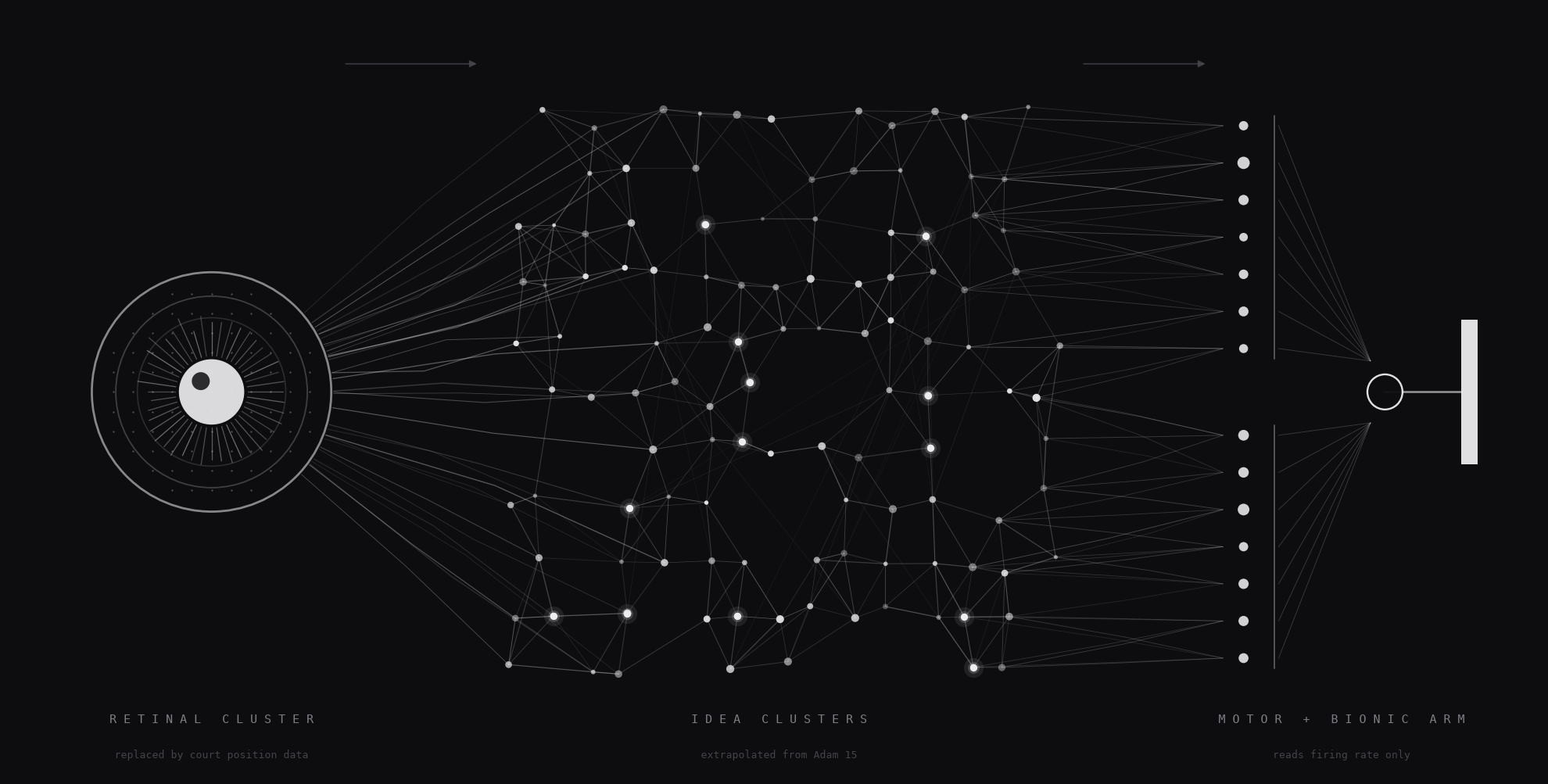
Three segmentsAdam 15 has a retinal cluster that sees, cortical idea clusters that learn and understand, and a motor cluster that moves the paddle. Running all three as one input-output organism is what makes him too heavy for a web page.
Quanta keeps the middleHis idea and understanding clusters were extrapolated into 540 spiking cells. The retinal cluster was replaced with calibrated position data from the court. The motor cluster was replaced with a bionic arm, a decoder taught to read what the idea clusters put out.
The arm is blindIt reads how fast each half of the motor pool is firing and nothing else. Silence the idea clusters and the paddle scores 19 percent, the same as a paddle that never moves. Measured, not claimed.
Traditional physicsPerfect reflection off the walls, return angle set by where on the paddle it struck, a little more speed each rally. No assists, no magnetism, no rubber banding for either side.
AccuracyQuanta returns 87 percent of the balls that reach it, against 19 percent for a paddle that never moves. On Adam 15's own court it returns 96, where Adam managed 82. Quanta plays this one game better. Adam 15 can learn the next one.
PlatformWeb app. 540 cells, 44 KB, about 0.05 ms a frame. Laptop, tablet and phone, and nothing is sent anywhere.
Hindsight
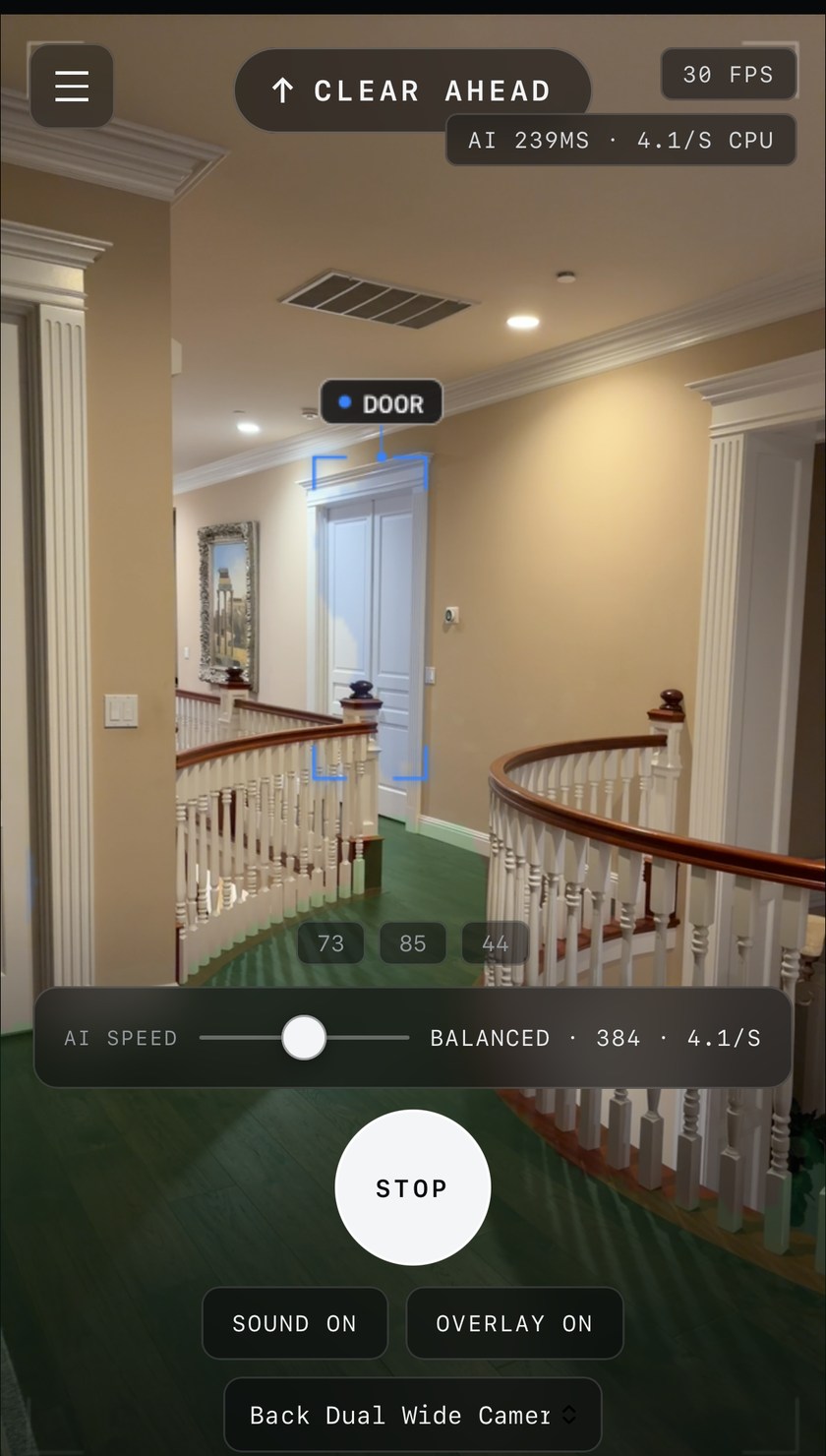
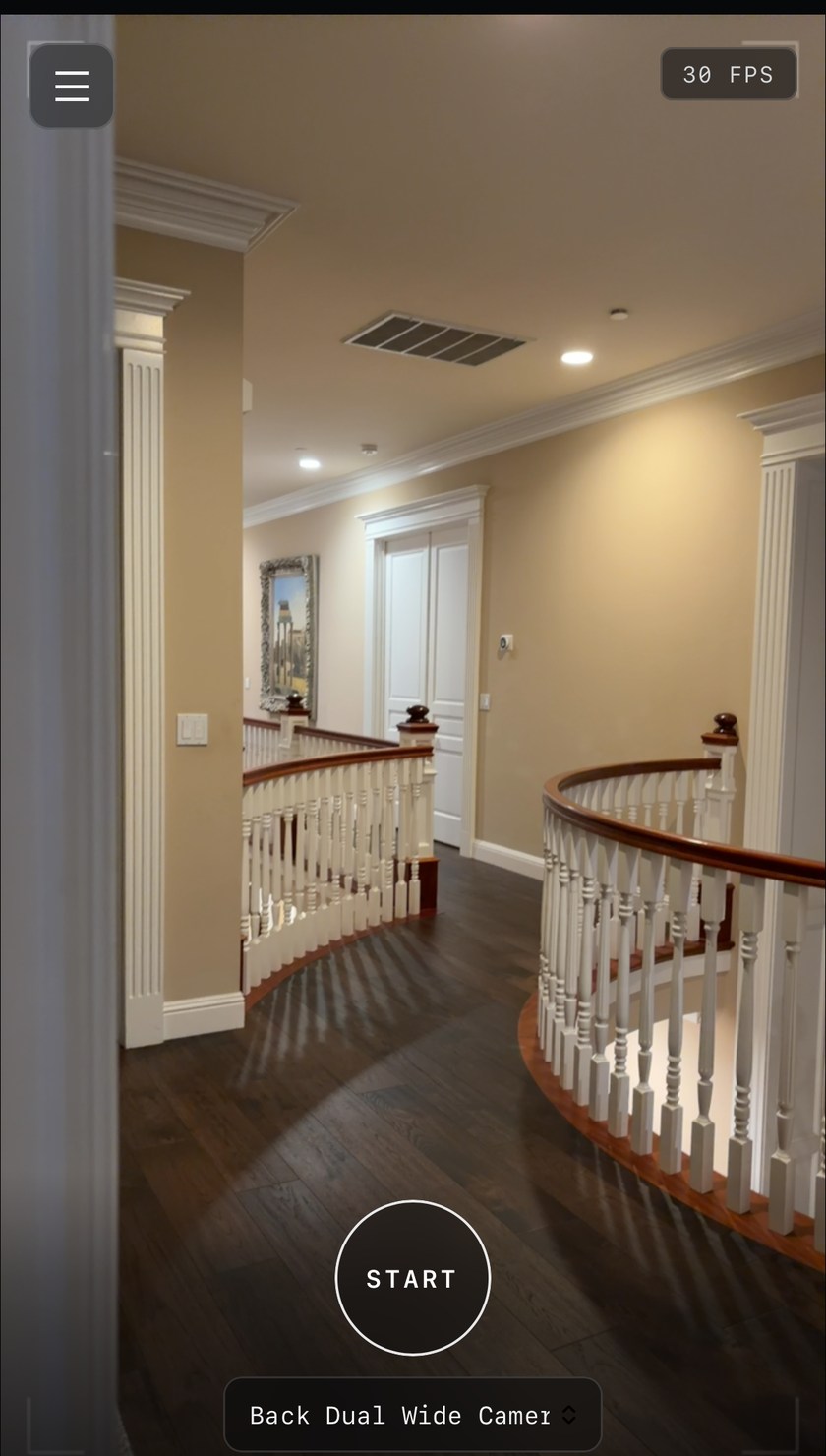
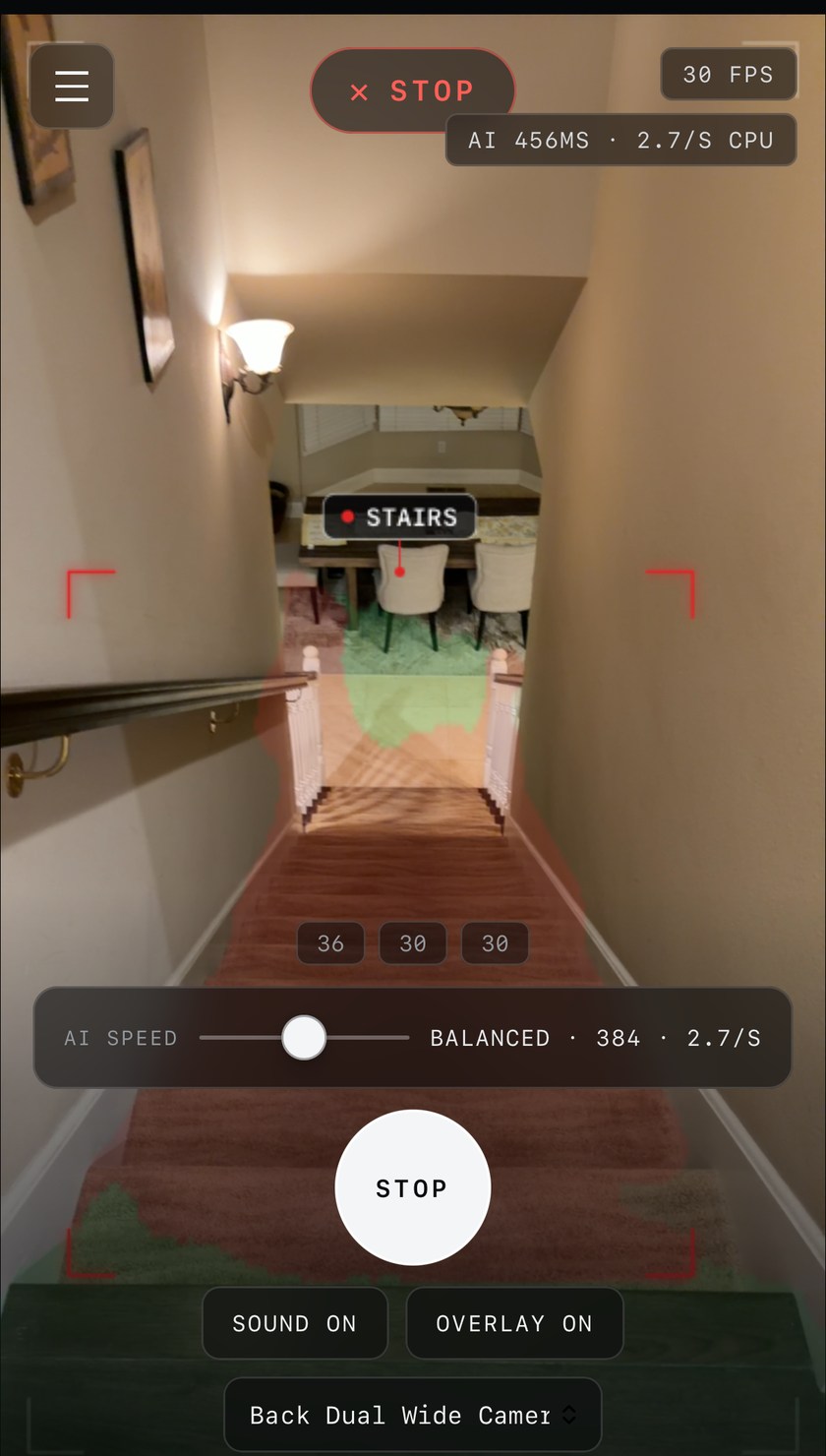
An AI navigation tool for the visually impaired. Hindsight is a downloadable web app that reads the path ahead in real time, offers spoken guidance toward safe, walkable ground, and gives early warning when a hazard appears. It runs on Pathfinder, our custom in-house vision model: five million parameters trained by the Clovermind team to identify walkable pathways and flag their hazards.
Real-time path readingReads the scene ahead as you move and separates safe, walkable ground from everything else.
Spoken guidanceSpeaks directions toward safe ground and gives early warning when a hazard appears.
Adjustable by feelAI speed, spoken feedback, and the visual overlay are each one tap to adjust.
PlatformDownloadable web app
ModelPathfinder, a five million parameter vision model built in-house
Adam V2
A spiking neural network you teach yourself. Adam V2 grows an idea cortex and a voice on top of V1's seeing layer: it answers first, you tell it the truth, and the mismatch between the two, measured inside the network, becomes its learning rate. Every boot is a fresh brain that lives in your tab, learns your handwriting in front of you, and dies when you close it. Nothing you draw or teach leaves the page.
It answers before it hearsEvery lesson has two phases. The picture alone drives the network's own answer; the truth arrives second. Nothing outside the network computes the error.
Teach it liveDraw a digit, hear its answer, correct it. One lesson is often enough to flip the next answer, and the gate value on screen shows how surprised it was.
Each boot is its own AdamThe brain lives in the page's memory and is never uploaded, cached, or saved. Close the tab and that Adam is gone. Boot a blank one and raise it from nothing.
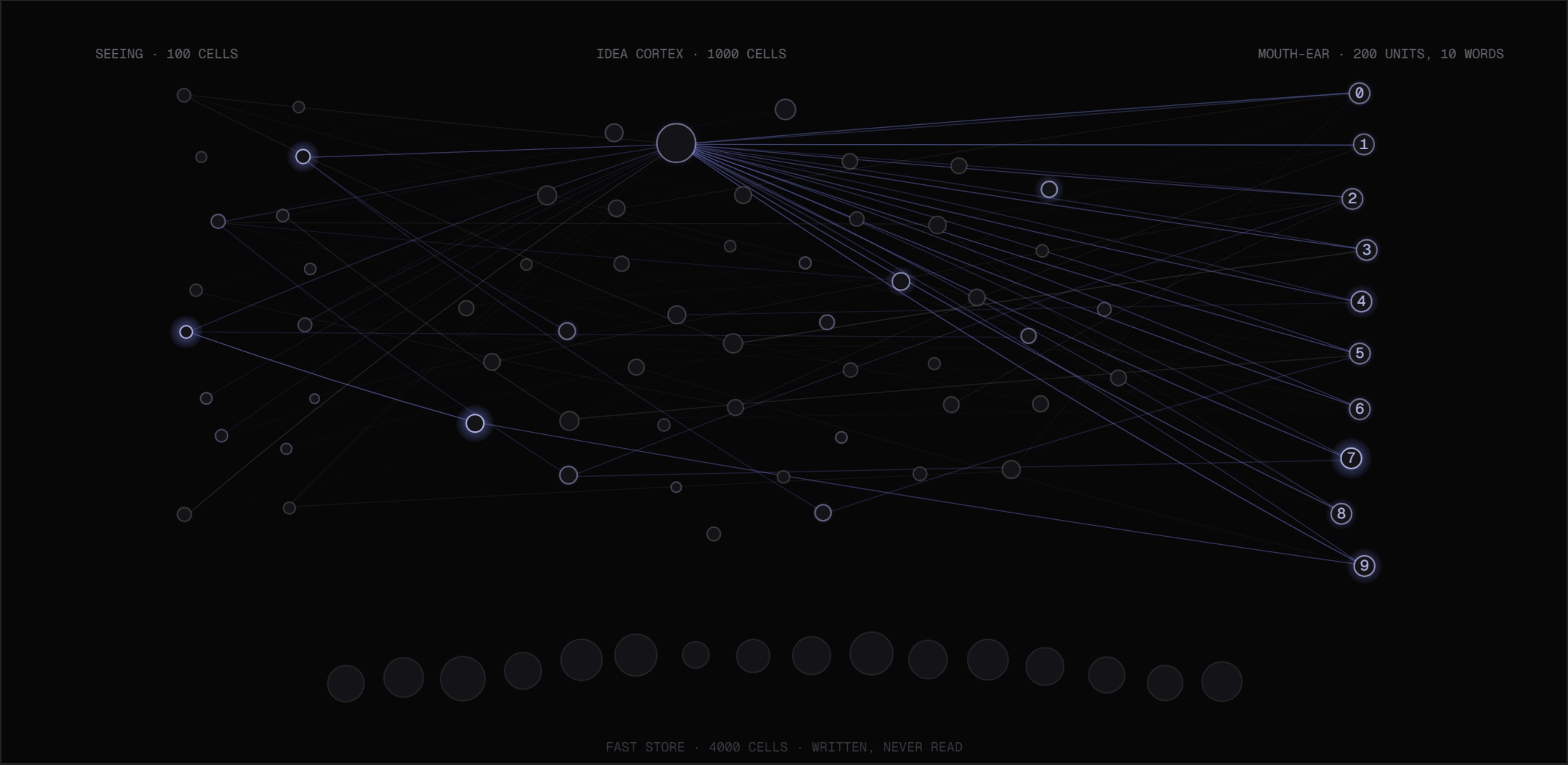
The cortex, mappedA live map of all four populations at cluster grain: seeing layer, idea cortex, the shared mouth-ear, and the fast store, drawn unconnected because it is.
It says nothing when unsureBelow a measured confidence gate it declines rather than guesses, and asks to be taught instead.
AccuracyThe shipped brain names 60.5% of unseen clean digits before you teach it, and its confusions are yours to fix. This is a research demo you finish training.
PlatformWeb app, runs in the browser, nothing sent anywhere
ModelDENN v2: a spiking system of four populations and six thousand units with continuous local plasticity, built in-house
Adam V1
A spiking neural network reading handwritten digits through your camera. Adam is a hundred neurons that taught themselves what digits look like, with nobody labelling anything: no answer key, no supervision, just repeated exposure and competition between cells. Point a camera at a written number and you can watch the whole thing happen, spike by spike, in your browser. Nothing you point it at leaves your phone.
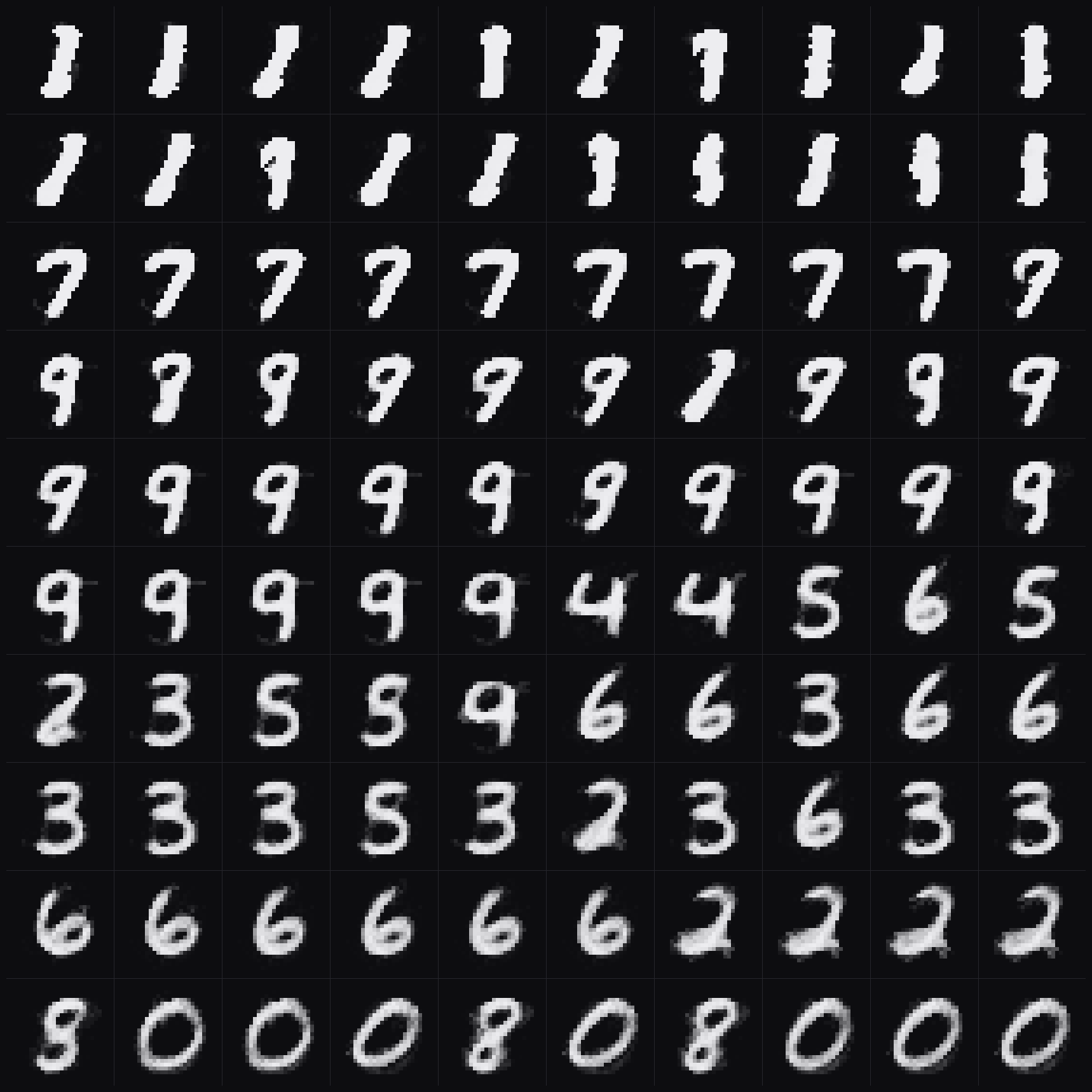
Learned without labelsA hundred cells competing to respond to what they are shown. Nothing was told which digit is which, and the picture beside this is the result, one tile per neuron.
Watch it thinkThe frame it receives, the hundred neurons firing, and how close the pattern comes to each of the ten digits, all on screen at once.
It says nothing when unsureBelow a measured confidence threshold it reports nothing rather than naming the nearest digit. It answers about four frames in ten.
Honest by constructionA control switch runs the identical readout on an untrained network, so you can see for yourself how much of the result is the learning and how much is the readout.
Accuracy60.5% on clean handwritten digits, against 32% for an untrained network of the same size. A camera is harder. This is a research demo, not a scanner.
PlatformWeb app, installable, runs offline
ModelA spiking network of 100 neurons trained by spike-timing dependent plasticity, built in-house
In the works
The next thing we're building. Details are under wraps for now. It's cut from the same cloth: careful AI, aimed squarely at extending what people can do. Check back soon.